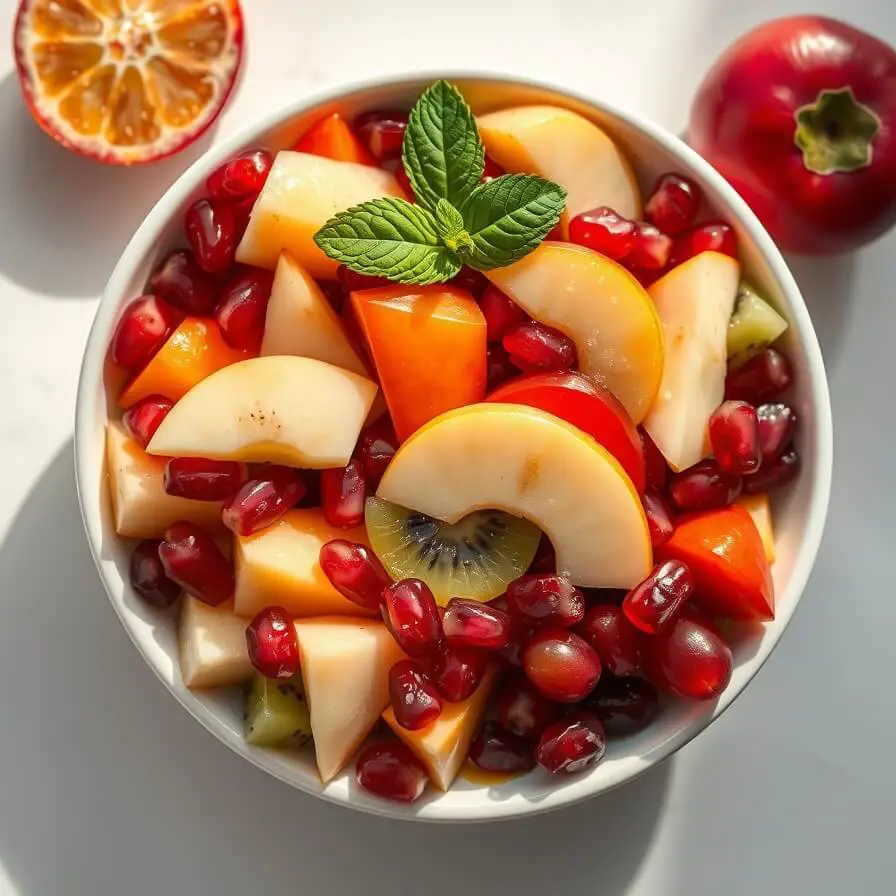
If there’s one dish that quietly carries the magic of winter without trying too hard, it’s a winter fruit salad. Every year, when the weather turns crisp and my kitchen starts smelling like cinnamon, citrus, and fresh pine, I find myself craving something bright and refreshing—something that balances all the hearty soups and cozy casseroles of the season. One December afternoon, after coming home from the market with a bag full of ruby pomegranates and glossy pears, I decided to put together a fruit salad that felt like winter in a bowl. I still remember how my family hovered around the counter, “taste-testing” so much that I had to guard the mixing bowl just to save enough for dinner.
This recipe became a small tradition in our house. I love how the fruits look like little jewels—deep red, gold, and creamy white—almost too pretty to eat. And the best part is how simple it is. No fancy steps, no complicated prep, just good seasonal fruit with a light honey-citrus dressing that makes everything come alive.
If you’re looking for something refreshing yet cozy, vibrant yet seasonal, and special enough for the holidays but easy enough for a weeknight, this winter fruit salad might become your tradition too.
Why I Love This Recipe

There’s something undeniably special about winter fruit. Unlike summer fruits that practically jump into your cart, winter fruit feels intentional—thoughtful even. This salad brings together all the flavors I crave when the air gets cold: citrus that wakes up the palate, crunchy apples and pears for texture, grapes for sweetness, and pomegranate seeds for that tart little pop.
I also love how versatile it is. When guests come over, it feels festive enough to set on the table with a nice spoon and let everyone admire it. And when I’m home alone on a quiet afternoon, I’ll scoop some into a bowl, drizzle a bit more honey, and enjoy it like a guilt-free treat. It’s the kind of recipe that makes me feel healthy without trying to be healthy.
Another reason this salad stands out is the dressing. Winter fruits can be heavy on sweetness, so the lemon-orange honey dressing brightens everything. It binds all the flavors together without overpowering them. It’s refreshing, crisp, and honestly one of those recipes that turns a fridge drawer full of fruit into something impressive.
Ingredients for Winter Fruit Salad
Whenever I make this recipe, I like to think of it less as gathering ingredients and more as selecting the perfect winter stars. Winter fruit tends to be sturdier and more structured than summer fruit, which is exactly why this salad works so well. Here’s what I use and why:
Pomegranates are the jewel of winter produce. Their seeds add tartness, crunch, and color. I usually buy whole pomegranates and seed them myself because the freshness makes such a difference.
Pears bring a soft, buttery sweetness. Choose firm but ripe ones so they hold their shape. Bosc or Bartlett both work beautifully.
Apples add crispness. I like Honeycrisp for their natural sweetness and crunch, but Gala and Fuji also do well.
Oranges or mandarins brighten the dish with citrusy freshness. I prefer to segment them, removing the membranes, so the pieces feel silky and tender.
Red grapes add juicy sweetness. You can slice them in half, and that also helps them soak up the dressing.
Kiwi is optional but gorgeous—it adds that vibrant green pop the salad needs.
For the dressing, the ingredients are simple: honey, freshly squeezed lemon juice, a splash of orange juice, and a tiny pinch of cinnamon. It’s a bright, slightly sweet blend that pulls all the flavors together.
Altogether, these ingredients create a refreshing winter salad that feels balanced—fruity, tangy, crisp, and lightly sweetened.
How Much Time Will You Need?
One of the best things about this recipe is how little time it actually takes.
You’ll need about 20 minutes to prep all the fruit—peeling, slicing, segmenting, and gently mixing everything together. If you’re seeding a pomegranate yourself, add another 5 minutes.
The dressing takes less than 2 minutes to whisk together.
So in total, expect around 20–25 minutes from start to finish. You can serve it right away, but it tastes even better after resting in the fridge for 15 minutes so the dressing settles into the fruit.
How to Make This Winter Fruit Salad
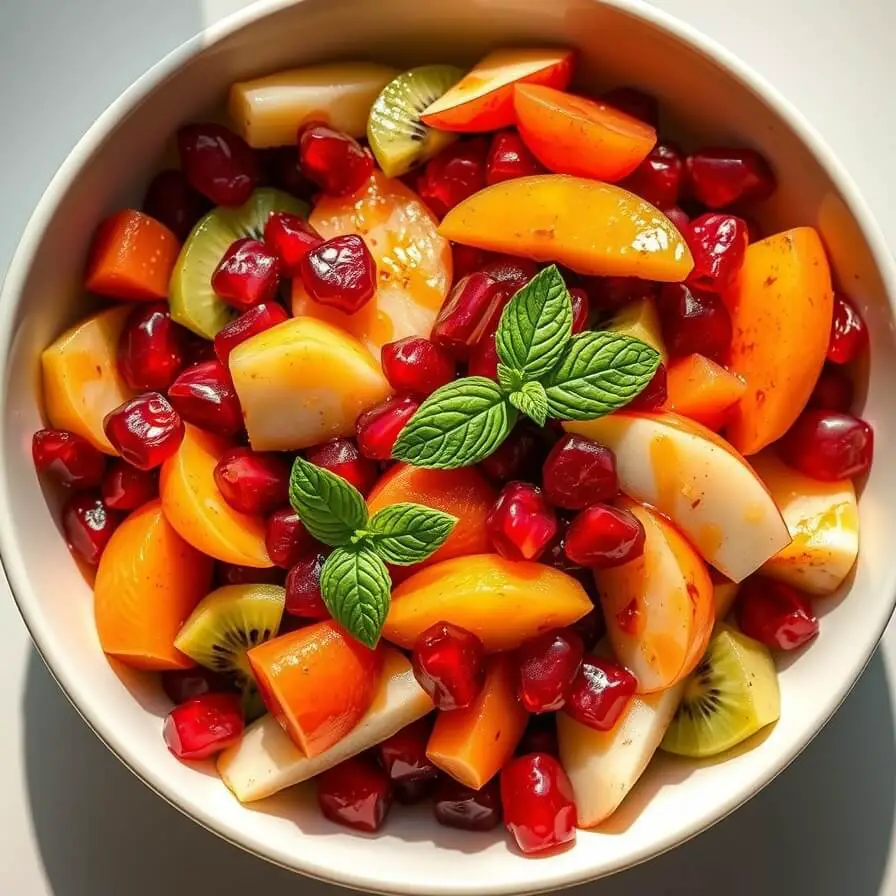
Here’s exactly how I make it in my kitchen—simple, approachable steps that anyone can follow.
Step – 1: Prepare the citrus
Start by segmenting your oranges or mandarins. Slice off the top and bottom, run your knife down the sides to remove the peel and pith, then cut between each membrane to release perfect, juicy segments. This makes the salad taste much more delicate than using regular slices.
Step – 2: Chop the apples and pears
Core the apples and pears, then cut them into bite-sized cubes. I like to leave the skins on for color and texture. Toss them with a squeeze of lemon juice so they don’t brown while you prep the rest.
Step – 3: Prepare the pomegranate
Remove the seeds by cutting the fruit in half and gently tapping the back with a spoon over a bowl. Try not to crush them—you want whole, beautiful seeds.
Step – 4: Slice the grapes
Slice the grapes in half lengthwise. This helps them catch more dressing and makes each bite juicier.
Step – 5: Add the kiwi
Peel the kiwi and cut into half-moons. Add them gently so they don’t break apart.
Step – 6: Make the dressing
Whisk together honey, lemon juice, orange juice, and a pinch of cinnamon until smooth and glossy.
Step – 7: Combine everything
Add all fruits to a large mixing bowl. Pour the dressing over the top and gently fold with a spatula until every piece is lightly coated.
Step – 8: Chill and serve
Let it rest for 10–15 minutes in the fridge. This helps the flavors blend and gives the salad that refreshing, chilled finish.
Substitutions
If you ever find yourself missing an ingredient, don’t worry—this recipe is incredibly flexible.
A great substitute for pomegranate seeds is dried cranberries. They won’t offer the same crunch, but the tartness balances the sweetness of the other fruit beautifully.
If you’re not a fan of pears or can’t find good ones, you can swap them for additional apples or even persimmons if they’re firm enough.
Instead of grapes, you can use blueberries or chopped strawberries when they’re in season. They add a soft, juicy sweetness that still works well with the winter flavors.
For the dressing, maple syrup can replace honey if you prefer a richer, deeper sweetness. It’s especially nice if you want a more rustic winter vibe.
These swaps make the recipe not only easy but adaptable, allowing you to create a fruit salad that fits your taste or what you already have on hand.
Best Side Dish for Winter Fruit Salad
This salad pairs beautifully with so many meals, and here are three options I absolutely love serving it with:
Roasted chicken with herbs
It adds a refreshing contrast to the warm, savory flavors.
Creamy potato soup
The bright fruit cuts through the richness in the best way.
Cinnamon French toast
If you’re serving brunch, this pairing feels indulgent but balanced.
Serving and Presentation Tips
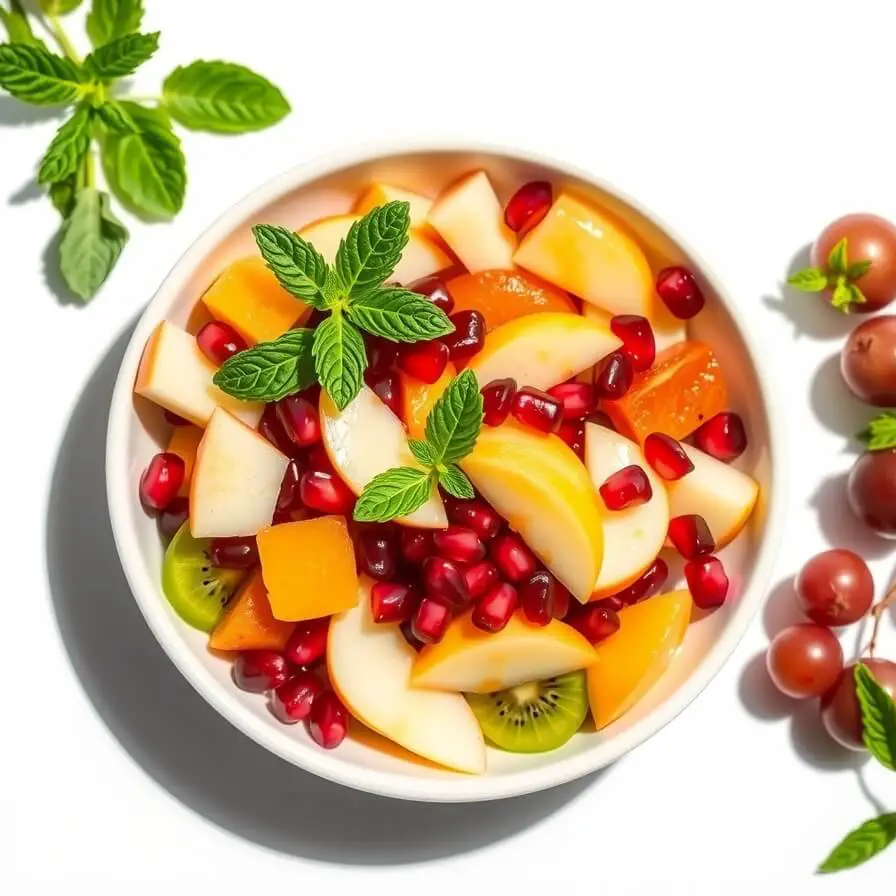
There’s something magical about turning a simple bowl of fruit into something that feels like a centerpiece. The hook for me has always been this: winter fruit already looks like a celebration—you just have to arrange it in a way that lets the colors shine. When I’m serving this for guests, I always choose a shallow white bowl or a clear glass dish. It lets the ruby-red pomegranate seeds and bright citrus glow almost like stained glass.
Layer the fruits instead of dumping everything in at once. I usually start with the apples and pears at the bottom, spoon the citrus segments on next, then scatter the grapes and kiwi. Finally, I sprinkle pomegranate seeds over the top so they stay bright and glossy. A small drizzle of leftover dressing right before serving makes the surface look fresh and inviting. If you want to elevate the presentation even more, add a few mint leaves—they aren’t required for flavor, but they look beautiful and give the salad a “finished” touch.
Tips and Tricks to Make This Recipe Better
Here’s the hook: winter fruit salad is already good, but with just a few adjustments, it becomes the kind of dish people talk about all season long.
My favorite trick is to chill the bowl before assembling the salad. A cold bowl keeps the fruit crisp and refreshing much longer.
Another tip is to prepare the dressing first. It prevents the fruit from drying out while you chop, and you can toss the pieces in the dressing little by little. The citrus from the dressing protects the fruit from browning, which makes the salad look vibrant even hours later.
If you want an extra-bright flavor, zest half of an orange or lemon into the dressing. It intensifies the aroma and adds a layer of freshness that people notice but can’t always identify.
And here’s a final bonus trick: if you’re serving a crowd, make two batches—one with the delicate fruits like kiwi and one with the sturdier fruits like apples and pears. Combine them only before serving to keep the textures perfect.
Common Mistakes to Avoid
Here’s the hook: winter fruit salad is easy, but that also means it’s easy to accidentally dull its flavors or lose its freshness.
One mistake I often see is using overripe fruit. Winter fruit should be firm and crisp; otherwise, the salad becomes mushy. Choose fruit that feels fresh and not bruised.
Another mistake is skipping the lemon juice. Even if you don’t think you need it, citrus is essential to keep apples and pears from browning and to balance the natural sweetness of winter fruits.
Adding too much dressing can also drown the natural flavors. The goal is to lightly coat—not soak—the fruit. Start small; you can always add more later.
Lastly, avoid making the salad too far ahead. While some chill time helps, making it many hours in advance can soften the fruit. It’s best assembled 30–60 minutes before serving.
How to Store It
Winter fruit salad stores surprisingly well when handled properly. Transfer the leftovers into an airtight container and keep it in the refrigerator for up to 2 days. The citrus dressing helps maintain freshness, but the apples and pears may soften slightly over time.
If you want the salad to stay crisp longer, store the dressing separately and add it just before serving. You can also refresh leftovers with a small splash of lemon juice before eating.
Avoid freezing this salad—the texture of the fruit will deteriorate and become watery once thawed.
FAQ
Can I make this fruit salad the night before?
You can, but it’s best within 24 hours. If prepping ahead, keep the dressing separate and add it before serving.
What fruits should I avoid using?
Very soft fruits like bananas or raspberries don’t hold up well in winter fruit salad and can become mushy.
Can I make it sweeter without using a lot of honey?
Yes—add sweeter fruits like grapes or use a splash of apple juice in the dressing.
How can I make this salad more festive for holidays?
Add mint, use a decorative bowl, or top with coconut flakes or chopped pistachios.
Can I use frozen fruit?
Frozen fruit is not ideal because it loses its firmness and becomes watery once thawed.
Winter Fruit Salad Recipe
- Total Time: 20 minutes
- Yield: 6 1x
- Diet: Vegetarian
Description
This refreshing winter fruit salad brings together crisp apples, juicy pears, bright citrus, sweet grapes, and ruby pomegranate seeds—all lightly coated in a honey-citrus dressing that enhances every flavor. It’s a dish that feels festive enough for gatherings but simple enough for weekday meals. The natural sweetness of the fruit paired with the bright acidity of the dressing makes it a perfect balance of comforting and refreshing. You can serve it as a side dish, a brunch addition, or even a light dessert. It’s vibrant, seasonal, and wonderfully easy to customize based on the winter produce you have on hand.
Ingredients
- Apples
- Pears
- Pomegranate seeds
- Oranges or mandarins
- Red grapes
- Kiwi
- Honey
- Lemon juice
- Orange juice
- Cinnamon
Instructions
- Segment the citrus and set aside.
- Chop apples and pears, tossing in lemon juice.
- Remove pomegranate seeds and slice grapes.
- Peel and slice kiwi.
- Whisk honey, lemon juice, orange juice, and cinnamon for the dressing.
- Combine all fruit in a bowl and drizzle with dressing.
- Toss gently to coat and chill before serving.
Notes
- Use firm, fresh fruit for the best texture. Add the dressing just before serving if prepping ahead.
- Prep Time: 20 minutes
- Cook Time: 0 minutes
- Category: Salad
- Method: No-cook
- Cuisine: American
Nutrition
- Serving Size: 6
- Calories: 145
- Sugar: 27g
- Sodium: 3mg
- Fat: 0.5g
- Saturated Fat: 0g
- Unsaturated Fat: 0.4g
- Trans Fat: 0g
- Carbohydrates: 36g
- Fiber: 5g
- Protein: 1g
- Cholesterol: 0mg