Champagne cake is one of those recipes that feels like a quiet celebration, even when there’s nothing officially on the calendar. The first time I made it, it wasn’t for a wedding or New Year’s Eve. It was a random Sunday afternoon when I had an open bottle of champagne left over from the night before and that familiar urge to bake something that felt a little special but not fussy.
As the cake baked, the kitchen filled with this soft, almost bakery-like aroma—light vanilla with a gentle fruity note from the champagne. My family kept wandering in, asking what smelled so good, and by the time it cooled, everyone was hovering, forks already in hand. That first bite surprised us all. It wasn’t boozy or overpowering. Instead, it was delicate, tender, and just slightly sweet, with a texture that felt celebratory without screaming for attention.
This isn’t one of those overcomplicated showstopper cakes that takes all day and every dish in your kitchen. It’s elegant in a simple, Martha-meets-home-baker way. The kind of cake you make when you want something memorable but still approachable. If you’ve ever wanted a dessert that feels grown-up, light, and quietly impressive, this champagne cake might just become your new favorite.
Why I Love This Recipe
What makes this champagne cake truly special is its balance. It manages to feel luxurious without being heavy, and celebratory without being overdone. The champagne doesn’t shout—it whispers. It adds a subtle depth and softness that you simply can’t get from milk or water alone. The crumb turns out incredibly tender, almost velvety, and the flavor feels refined but comforting at the same time.

I love that this recipe works for so many occasions. It’s perfect for birthdays, bridal showers, anniversaries, or even a casual dinner where you want dessert to feel intentional. It also photographs beautifully, which is a nice bonus if you enjoy sharing your bakes or saving them for special memories.
Another reason I keep coming back to this recipe is how forgiving it is. You don’t need professional baking skills or fancy equipment. The steps are straightforward, and the ingredients are familiar. Even if you’re not someone who bakes often, this cake gives you that “I actually made this” confidence.
Most of all, I love how people react to it. Champagne cake sparks curiosity. Guests always ask what’s in it, and when you tell them, there’s this little smile—like they’re in on a secret. That reaction alone makes it worth baking again and again.
Ingredients for Champagne Cake
This cake doesn’t rely on unusual ingredients, but each one plays an important role in creating that soft texture and delicate flavor.
You’ll start with all-purpose flour, which gives the cake structure without making it dense. I always spoon and level my flour rather than scooping directly from the bag—it makes a difference in how light the cake turns out.
Granulated sugar adds sweetness, of course, but it also helps keep the crumb moist. Don’t cut back too much here; this cake needs that balance to complement the champagne.
Unsalted butter is key for richness. I like using it at room temperature so it creams smoothly with the sugar. That step builds air into the batter, which helps the cake rise beautifully.
Egg whites are what give this cake its signature lightness. Using only whites keeps the color pale and the texture airy, which is exactly what you want in a champagne cake.
Champagne is the star. A dry or semi-dry champagne works best. You don’t need anything expensive—just something you’d enjoy drinking. The flavor mellows as it bakes.
Baking powder provides lift, while a touch of salt balances the sweetness and enhances the overall flavor.
Vanilla extract rounds everything out, adding warmth and familiarity that pairs perfectly with the champagne.
How Much Time Will You Need
This is one of those cakes that feels impressive but doesn’t demand your entire day. From start to finish, you’re looking at roughly an hour and a half.
Prep time usually takes about twenty minutes. That includes measuring ingredients, creaming the butter, and mixing the batter.
Bake time is around thirty to thirty-five minutes, depending on your oven and pan size.
Cooling time is important and often overlooked. Give the cake at least thirty minutes to cool before frosting or slicing. Rushing this step can affect the texture.
Overall, it’s a relaxed baking project—perfect for a weekend afternoon or a calm evening in the kitchen.
How to Make This Champagne Cake
Step – 1:
Start by preheating your oven and preparing your cake pans. Grease them well and line the bottoms with parchment paper. This ensures the cake releases cleanly and keeps that delicate crumb intact.
Step – 2:
In a bowl, whisk together the flour, baking powder, and salt. This step helps distribute the leavening evenly so the cake rises consistently.
Step – 3:
In a separate large bowl, cream the butter and sugar together until light and fluffy. Take your time here. This process builds air into the batter and sets the foundation for a soft cake.
Step – 4:
Add the egg whites gradually, mixing well after each addition. The batter should look smooth and slightly glossy at this stage.
Step – 5:
Mix in the vanilla extract. Then, begin alternating the dry ingredients with the champagne, starting and ending with the dry mixture. Mix gently and stop as soon as everything is combined. Overmixing can make the cake tough.
Step – 6:
Divide the batter evenly between your prepared pans. Smooth the tops lightly with a spatula.
Step – 7:
Bake until a toothpick inserted in the center comes out clean or with a few moist crumbs. Let the cakes cool in the pans briefly before turning them out onto a wire rack.
Substitutions
If you don’t have champagne on hand, prosecco or cava work beautifully and keep the same light, celebratory feel. Even a sparkling white wine can do the job.
For a non-alcoholic version, sparkling white grape juice is a great alternative. It keeps the sweetness and lightness without the alcohol.
You can swap butter for a good-quality plant-based butter if needed, but make sure it’s one meant for baking to maintain structure.
Cake flour can replace all-purpose flour for an even softer crumb, though it’s not essential.
Best Side Dish of Champagne Cake
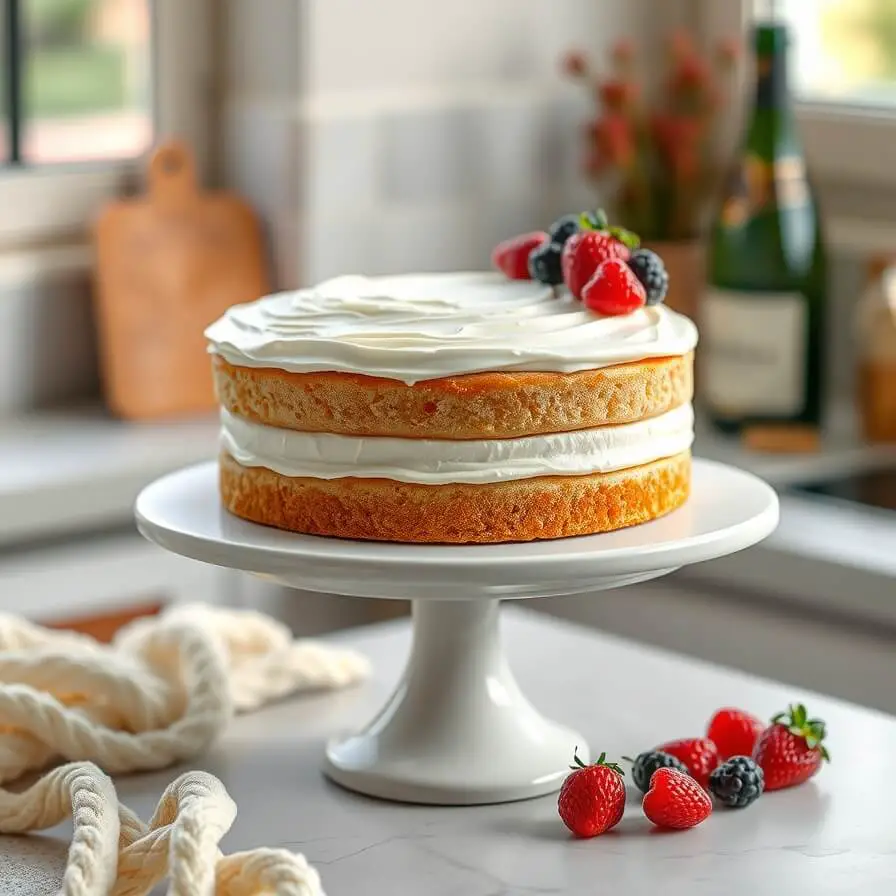
Fresh mixed berries, lightly sweetened whipped cream, and a simple vanilla bean ice cream are all perfect companions. Each one complements the cake without overpowering its delicate flavor.
Serving and Presentation Tips
There’s something about champagne cake that invites a little extra care when it comes to serving. It doesn’t need dramatic decoration, but thoughtful presentation makes it feel intentional and celebratory.
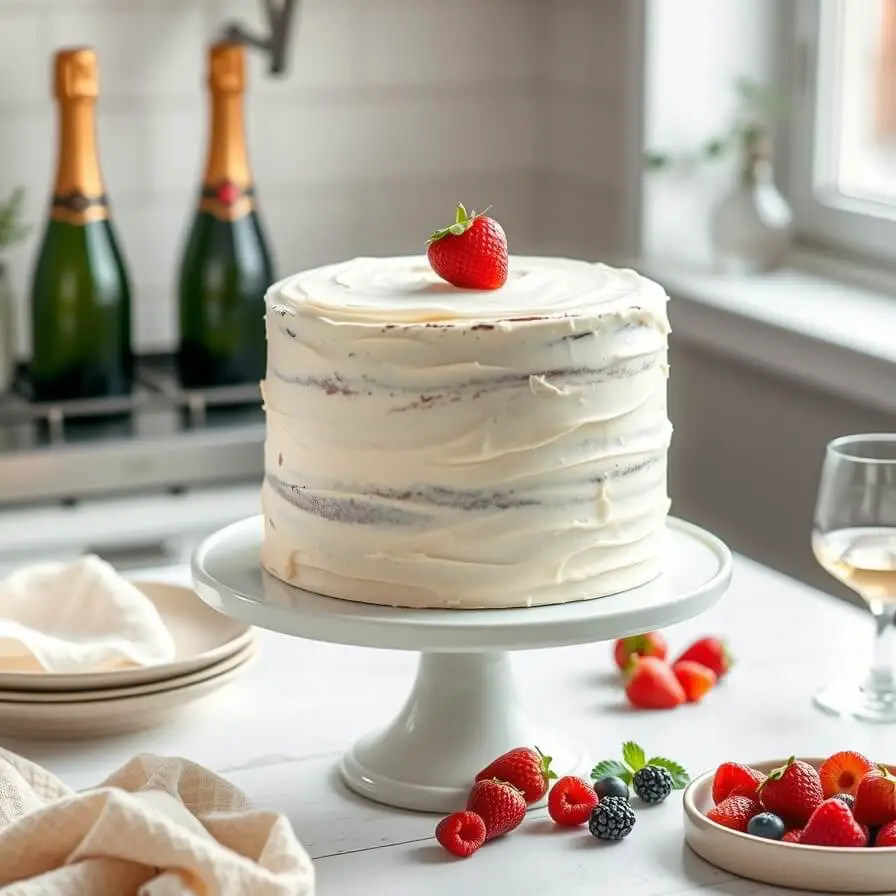
I usually let the cake come fully to room temperature before serving. The flavor opens up more, and the crumb feels softer and more delicate. If the cake is layered, I like to frost it lightly rather than heavily. A thin, smooth layer of frosting allows the cake itself to shine and keeps everything from feeling too sweet.
For a simple but elegant look, I often dust the top with powdered sugar just before serving. It catches the light beautifully and adds a soft finish without overpowering the flavor. If I’m serving this for guests, I’ll garnish the plate with a few fresh berries or a small swirl of whipped cream on the side. It makes the dessert feel restaurant-worthy without any extra effort.
When slicing, use a sharp knife and wipe it clean between cuts. This keeps the slices neat and shows off the cake’s tender crumb. Champagne cake looks especially lovely on white or neutral plates, where its pale color really stands out.
Tips and Tricks to Make This Recipe Better
A few small adjustments can elevate this cake from good to unforgettable.
First, always use room-temperature ingredients. Butter, egg whites, and even the champagne blend more smoothly when they’re not cold. This helps create a uniform batter and a more even bake.
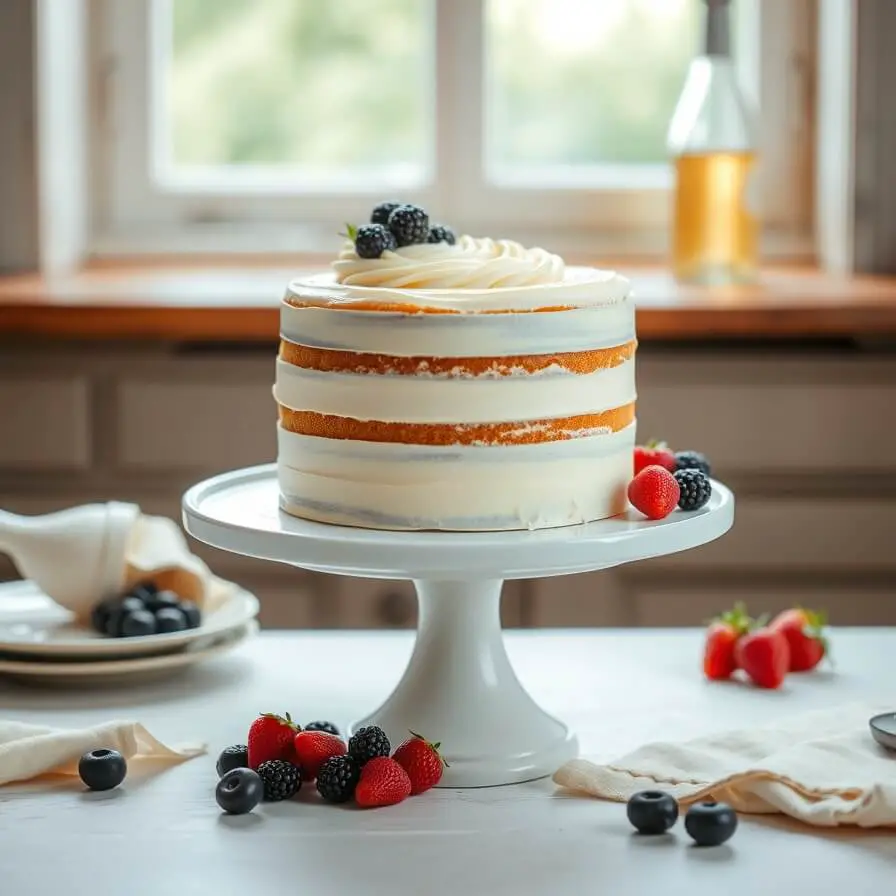
Second, don’t rush the butter and sugar creaming step. I usually mix for a full three to four minutes. The mixture should look pale and fluffy, not dense. This step directly affects how light the cake turns out.
Another trick is to measure the champagne carefully. Too much liquid can weigh down the batter, while too little can make the cake dry. Pour slowly and measure accurately.
If you want to enhance the flavor just a bit more, you can brush the baked cake layers lightly with a tablespoon or two of champagne once they’ve cooled. This adds moisture and reinforces that subtle champagne note without making the cake soggy.
Lastly, trust your oven. Every oven bakes differently, so start checking for doneness a few minutes early. A perfectly baked champagne cake should spring back gently when touched.
Common Mistakes to Avoid
One of the most common mistakes is overmixing the batter. Once the flour goes in, mix gently and stop as soon as everything is combined. Overmixing develops gluten, which can make the cake dense and chewy.
Another issue is using sweet champagne or sparkling wine that’s too sugary. This can throw off the balance of flavors and make the cake cloying. A dry or semi-dry option works best.
Skipping parchment paper is another mistake I see often. This cake is delicate, and parchment helps ensure it releases cleanly from the pan.
Baking at the wrong temperature can also cause problems. Too hot, and the cake may dome or brown too quickly. Too cool, and it won’t rise properly. Always preheat your oven fully.
Finally, cutting into the cake while it’s still warm can ruin the texture. Let it cool completely before slicing or frosting.
How to Store It
Champagne cake stores surprisingly well if handled properly.
If you plan to enjoy it within a day, you can keep it covered at room temperature. Use a cake dome or wrap it gently to prevent it from drying out.
For longer storage, place the cake in an airtight container and refrigerate it. It will stay fresh for up to four days. Before serving, let it sit at room temperature for about thirty minutes so the texture softens.
You can also freeze champagne cake. Wrap individual slices or whole layers tightly in plastic wrap, then place them in a freezer-safe bag. Frozen cake keeps well for up to two months. Thaw overnight in the refrigerator and bring to room temperature before serving.
FAQ
Can I make champagne cake ahead of time?
Yes, this cake is a great make-ahead option. You can bake the layers a day in advance and frost them just before serving.
Does the alcohol bake out of the cake?
Most of the alcohol cooks off during baking, leaving behind a subtle flavor rather than any strong alcoholic taste.
What frosting works best with champagne cake?
Light frostings like vanilla buttercream, whipped cream frosting, or even a cream cheese frosting pair beautifully.
Can I make this cake as cupcakes?
Absolutely. Just reduce the baking time and check for doneness after about fifteen minutes.
Is champagne cake very sweet?
No, it’s balanced and light. The sweetness is gentle, which is part of what makes it so enjoyable.
Champagne Cake Recipe
- Total Time: 1 hour 30 minutes
- Yield: 10 1x
- Diet: Vegetarian
Description
This champagne cake is light, tender, and quietly elegant. It’s the kind of dessert that feels celebratory without being overwhelming, perfect for special occasions or moments that deserve a little extra care. The champagne adds a delicate depth that sets this cake apart from classic vanilla, creating a refined flavor that still feels comforting and familiar. Whether served plain, lightly frosted, or paired with fresh fruit, this cake brings a sense of occasion to the table while remaining approachable for home bakers. It’s simple enough to make on a relaxed afternoon and special enough to share with people you love.
Ingredients
- All-purpose flour
- Granulated sugar
- Unsalted butter
- Egg whites
- Champagne or sparkling wine
- Baking powder
- Salt
- Vanilla extract
Instructions
- Preheat the oven and prepare cake pans with butter and parchment paper.
- Whisk together the dry ingredients in a bowl.
- Cream butter and sugar until light and fluffy.
- Add egg whites gradually, mixing well.
- Stir in vanilla extract.
- Alternate adding dry ingredients and champagne, mixing gently.
- Divide batter evenly and bake until a toothpick comes out clean.
- Cool completely before serving or frosting.
Notes
- For best results, use room-temperature ingredients and avoid overmixing the batter. A dry champagne produces the most balanced flavor.
- Prep Time: 20 minutes
- Cook Time: 35 minutes
- Category: Dessert
- Method: Baking
- Cuisine: American
Nutrition
- Serving Size: 10
- Calories: 320
- Sugar: 22g
- Sodium: 210mg
- Fat: 14g
- Saturated Fat: 8g
- Unsaturated Fat: 5g
- Trans Fat: 0g
- Carbohydrates: 45g
- Fiber: 1g
- Protein: 4g
- Cholesterol: 40mg